Unify AI Dashboards
Product Direction & Design: Defining an AI-powered analytics layer for engineering teams (concept validated, deprioritised)
Company
CloudBees (Unify)
Role
Lead Product Designer
Industry
AI · Data Visualization · DevTools
Duration
2 Months

Overview
Engineering teams were piecing together pipeline health across Jenkins, GitHub Actions, Slack, and spreadsheets. The existing dashboard showed metrics, but didn’t help teams understand what mattered or what to do next.
As Lead Product Designer, I led research synthesis and product exploration to define a unified, AI-powered analytics experience, combining structured dashboards with proactive insights.
Status: Design completed and validated. Development was deprioritised due to a broader shift in AI product strategy.
The problem
Teams had access to data, but not to insight.
They struggled to:
Connect signals across multiple tools
Identify trends vs one-off failures
Prioritise what needed attention
Move from “something’s wrong” → “what should I do?”
The result was slow decision-making, fragmented visibility, and low trust in dashboards as a source of truth.
My role
I led the project from a product design and strategy perspective:
Synthesised research across 30+ participants
Defined the core problem and opportunity space
Explored and evaluated multiple product directions
Delivered a validated design aligned with engineering and product
This work required balancing user needs, technical feasibility, and business direction.

Defining the direction
A key part of the project was exploring how AI should surface value.
I evaluated four approaches:
AI-powered dashboards (integrated insights)
Smart test insights within existing UI
Slack-based alerting system
Conversational AI interface
Recommendation: AI-powered dashboards
→ Delivered proactive insights without changing user behavior
→ Worked across personas (ICs, platform engineers, leadership)
→ Reduced reliance on manual exploration
This direction was validated with stakeholders, though alternative approaches (e.g. chatbot) were considered for cost and speed reasons.
The solution
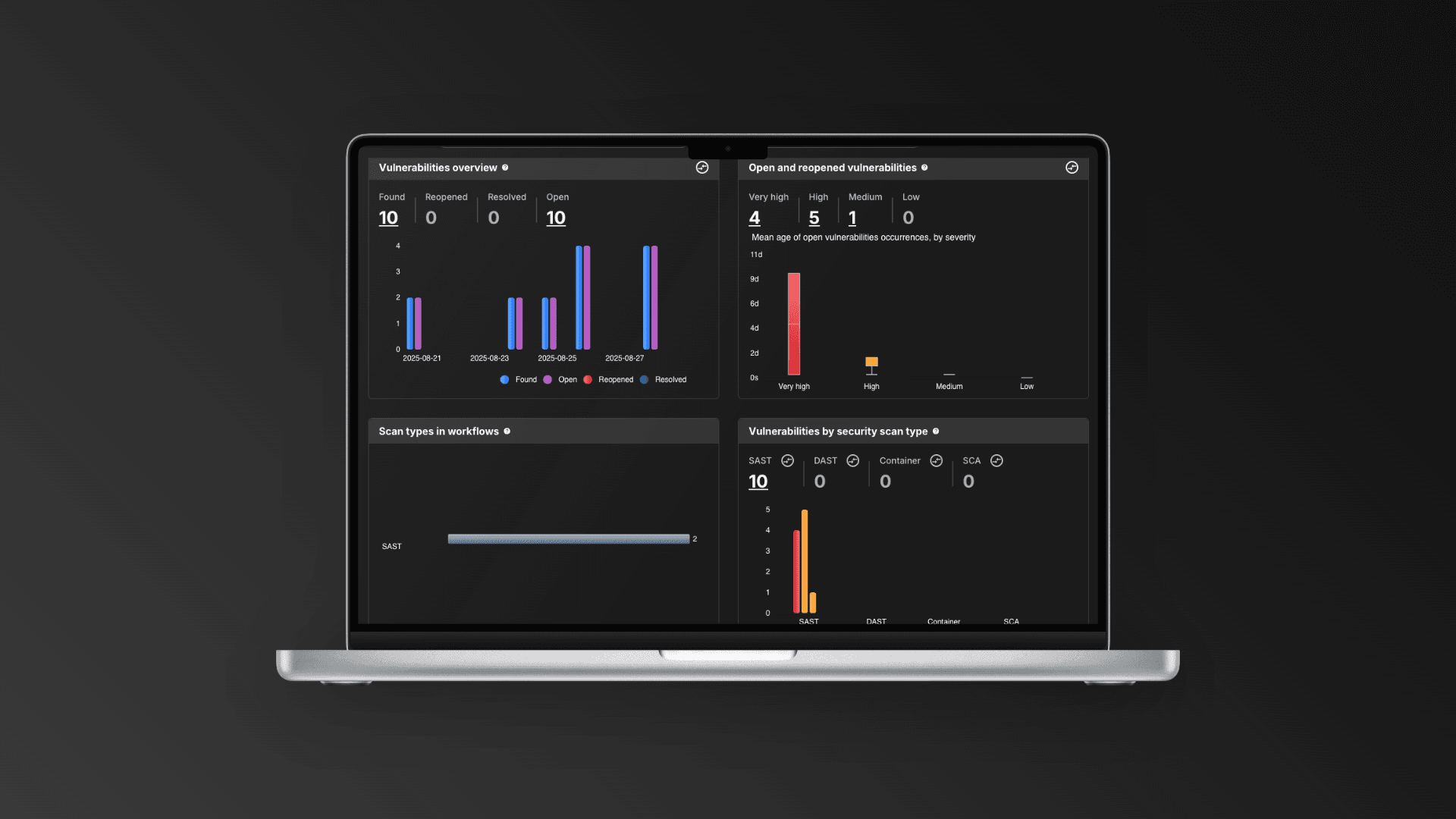
I designed a system that shifts dashboards from passive reporting to active decision support.
1. AI Insights Layer
Proactively surfaces anomalies, trends, and optimization opportunities
→ Helps teams focus on what matters without manual analysis
2. Structured Dashboard System
Preset layouts (2–3 columns) built on an existing widget grid
→ Ensures consistency and scalability across teams
3. Improved Data Visualization
Clearer charts and hierarchy for fast pattern recognition
→ Supports both high-level monitoring and deep investigation
How I approached it
This project focused on signal over noise.
Validated and extended existing research rather than restarting from zero
Framed the problem as “users need better signals, not more data”
Designed AI outputs with attention to clarity, confidence, and actionability
Collaborated closely with engineering to ensure feasibility and trust

Outcomes
Validated product direction
Aligned design, product, and engineering around a unified approach
Reached a development-ready state before deprioritisation
Clear shift in product thinking
From dashboards as reporting tools → dashboards as decision-making systems
Scalable foundation
Designed to support growing data complexity and multiple team needs
Key takeaway
AI in data products isn’t about adding more intelligence, it’s about surfacing the right signal at the right time.
This project reflects my ability to navigate ambiguity, evaluate trade-offs, and define product direction, even when final build decisions sit beyond design.
Other projects

Lang.ai CX Platform
AI Workflows for Support Teams: Reducing ticket resolution time by 20% through intelligent automation

Jenkins++ Integration Experience
CloudBees Unify: Redesigning multi-controller setup for platform engineers at scale

Release Notes Redesign
CloudBees CI: Turning a wall of documentation into a searchable, structured experience

CI Pipeline Dashboards
Troubleshooting at a Glance: Reimagining failure investigation as a proactive, AI-assisted workflow (concept validated)

Lang.ai Design System
Built from Scratch: From zero to a documented component library boosting team delivery by 25%

Jenkins Design System Reference
For AI-assisted Prototyping: Building shared infrastructure that makes AI tooling reliable for the whole team