Lang.ai CX Platform
AI Workflows for Support Teams: Reducing ticket resolution time by 20% through intelligent automation
Company
Lang.ai
Role
Product Designer
Industry
AI · SaaS · Automation
Duration
2 years

Overview
CX agents in enterprise teams were spending too much time on work that didn’t require human judgment, manually routing tickets, searching for context, and interpreting raw data.
As the sole product designer over two years, I designed and shipped AI-powered features that automated these tasks and surfaced insights directly in their workflow.
Impact:
↓ 20% ticket resolution time
↓ manual routing and repetitive work
↑ faster, more confident decision-making
The problem
Support teams were overwhelmed by volume and complexity.
Agents had to:
Manually gather context across tools
Interpret unstructured customer data
Make repetitive routing decisions
This created slow response times, high cognitive load, and inconsistent customer experience.
The opportunity wasn’t just adding features — it was making the product feel intelligent and proactive.
My role
I owned design end-to-end:
Led user research and discovery
Defined product direction with PMs and engineers
Designed and iterated on multiple AI-driven features
Supported implementation and rollout to enterprise customers
Worked across parallel workstreams, shipping features progressively behind feature flags.
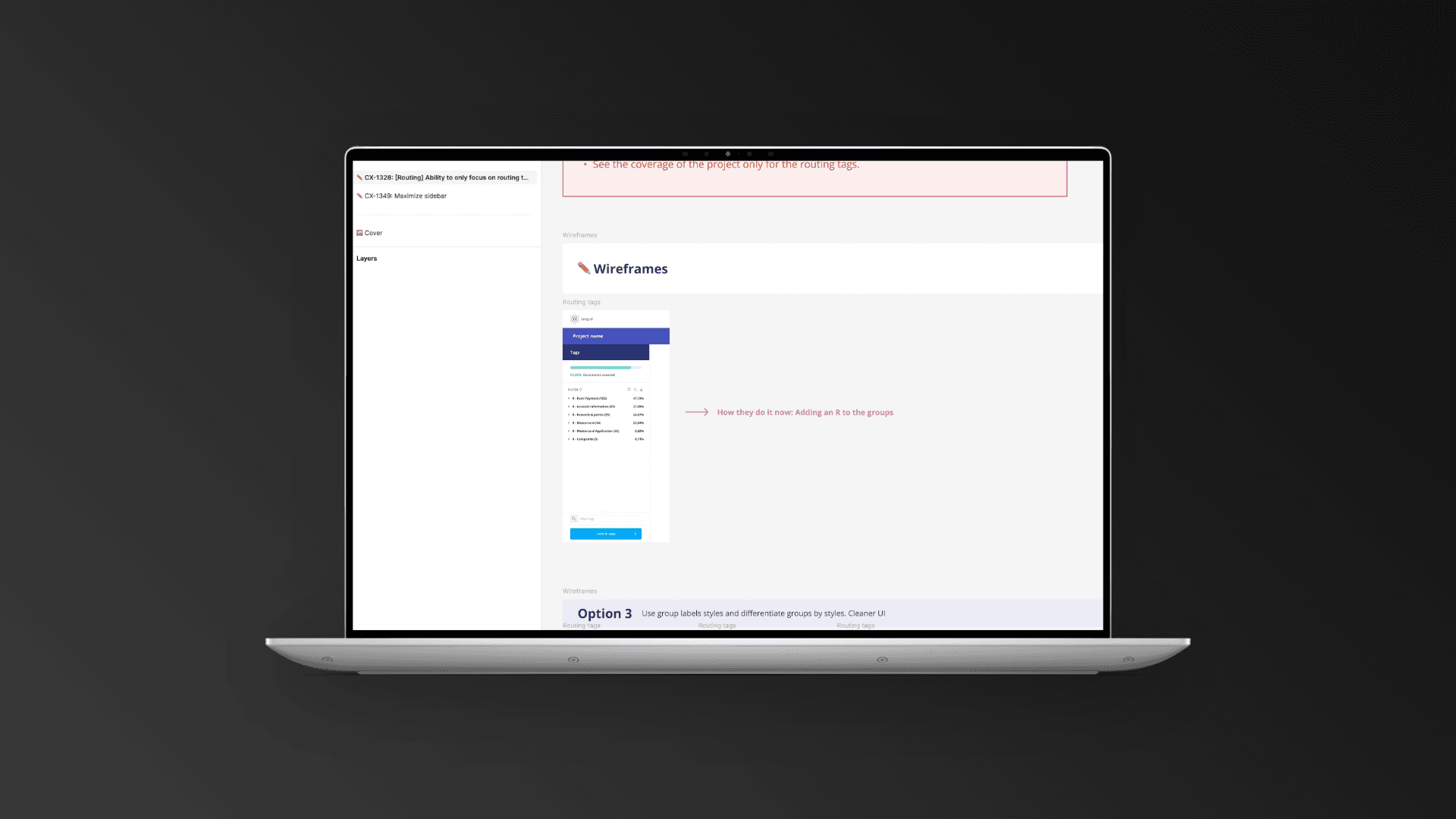

The solution
I introduced an AI layer that reduced manual effort and surfaced the right information at the right time.
1. AI Insights Summary
A high-level view of key patterns in customer conversations
→ Helped teams quickly understand what’s happening without digging into raw data
2. Automated Workflow Recommendations
AI suggested actions and routed tickets based on patterns
→ Reduced repetitive decisions and operational overhead
3. Sentiment Analysis Layer
Real-time understanding of customer tone
→ Enabled more context-aware and empathetic responses
How I approached it
Rather than describing a generic “design process”, I focused on grounding decisions in real usage:
Conducted user interviews and behavioral analysis
Used tools like Mixpanel and session recordings to identify friction
Iterated quickly in Figma with continuous feedback loops
Validated designs through usability testing before release
Every decision aimed to reduce cognitive load and improve speed of action.

Outcomes
Features were rolled out progressively to enterprise customers, allowing for validation in real conditions.
Results:
20% faster ticket resolution through automation
Reduced manual workload for CX agents
Improved clarity and confidence in decision-making
Introduced a new layer of customer understanding through sentiment insights
Key takeaway
Designing for AI products isn’t about exposing more data — it’s about making systems feel useful, timely, and trustworthy.
This project shifted the product from being reactive and manual to proactive and intelligent.
Other projects

Jenkins++ Integration Experience
CloudBees Unify: Redesigning multi-controller setup for platform engineers at scale

Release Notes Redesign
CloudBees CI: Turning a wall of documentation into a searchable, structured experience

Unify AI Dashboards
Product Direction & Design: Defining an AI-powered analytics layer for engineering teams (concept validated, deprioritised)

CI Pipeline Dashboards
Troubleshooting at a Glance: Reimagining failure investigation as a proactive, AI-assisted workflow (concept validated)

Lang.ai Design System
Built from Scratch: From zero to a documented component library boosting team delivery by 25%

Jenkins Design System Reference
For AI-assisted Prototyping: Building shared infrastructure that makes AI tooling reliable for the whole team